
AI Admin Starts at the Connector
AI admin tools are spreading into trades. For HVAC teams, the hard part is field memory: connector choices decide context survives the job and reaches review.
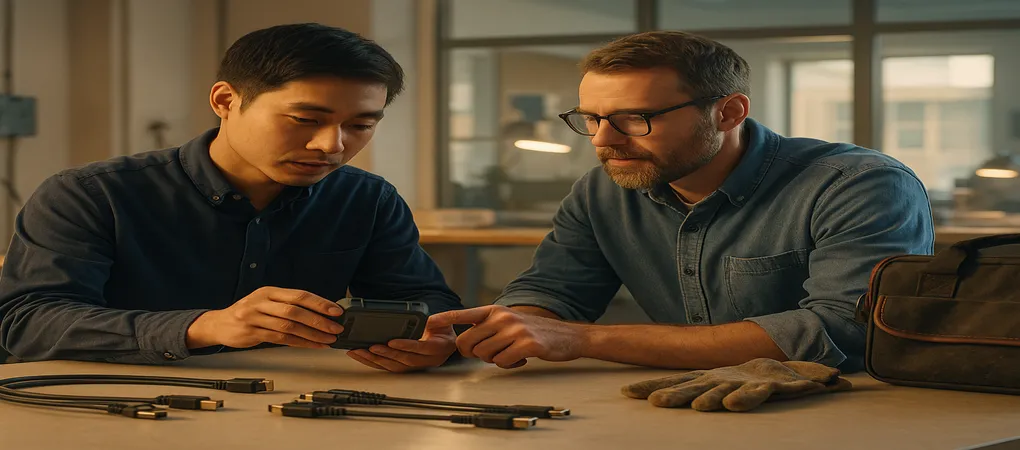
A clean AI admin screen and a vague condenser note should not belong to the same workday. In HVAC, they often do.
You know the moment. The tech gets back after a roof, an attic, and a crawlspace, the invoice is waiting, and the work order says: “checked capacitor, advised customer.” Nobody tried to be sloppy. The original detail decayed while the work kept moving.
Agence MAO’s international launch of an AI virtual assistance suite for French-speaking tradespeople and small business owners fits the larger pattern in AI right now: administrative software is moving closer to the trades, across languages and borders.
That is useful. But for home services, the durable bottleneck is not whether AI can format a report. It is whether the original field facts survive long enough to become Enterprise Memory.
The rule: reconstruction is not memory
“Reconstruction can get cheaper. Original context does not come back.”
A virtual assistant can organize what it receives. It can draft, route, summarize, and remind. But it cannot recover the homeowner’s exact concern, the tech’s spoken reasoning at the unit, or the small observation that never made it into the text field.
For product teams building AI hardware for trades, this creates a blunt design principle: specify the input path before you celebrate the workflow.
Five field-memory decisions product teams should make early
1. Admin AI is a destination, not the source
Field-service SaaS already owns schedules, invoices, customer records, and task flow. AI suites are now making the back office faster, including for tradespeople who work in French, English, Spanish, and many local operating styles.
But the source is still the job. The bay. The attic. The customer’s door. The moment when the technician explains what was checked, what was deferred, and what needs review.
- The software question: Can the AI produce a clean output?
- The hardware question: Did the field fact enter the system with enough context to be trusted?
2. The category is work memory, not audio files
Hearit.ai HA-MIC01 is our answer to this input problem: a wearable AI microphone for hands-free field voice, designed around the spoken work that happens while hands are busy and the customer is standing nearby.
The product thesis is not “store more audio.” It is Field Voice Data Layer: turning permitted work conversation and field facts into service reports, work orders, and searchable Frontline Work Memory for professional review.
This matters for technician dignity. The right system is worker-controlled, transparent, and work-only. It supports the human who diagnoses; it does not pretend to replace that judgment.
3. The connector is where AI theory meets sweat
Here is the concrete ODM trade-off many software-first teams underestimate: how the wearable module connects to the garment, power path, or accessory.
On a bench, almost any connector works. On a technician’s body, connectors meet lint, sweat, glove pulls, van seats, crawlspace snags, and charging habits that were not in the slide deck. Shenzhen can make the sample look calm; the truck will negotiate harder.
- USB-C: Fast to prototype, familiar, easy to source, and convenient for EVT. The cost is exposure to debris, side loading, accidental unplugging, and support noise when the port becomes the weak point.
- Magnetic or pogo-pin contact: Easy docking and a useful breakaway behavior. The cost is contact contamination, alignment tolerance, momentary disconnects during body movement, and more careful plating and spring-force design.
- Locking sealed connector: Better strain relief and more confidence under tugging. The cost is component price, assembly time, bulk on the body, harder field swap, and a larger certification and test plan.
- Hardwired pigtail: Stable once assembled. The cost is serviceability; a cable issue can turn into a module or garment return instead of a quick replacement.
The answer changes with the service model. Will the worker remove the module daily? Will the garment go through cleaning outside your control? Is the cable routed across a shoulder, pocket, or tool belt? Is the product sold as a replaceable accessory system or a sealed unit?
Pick the last callback from a vague work order.
Without asking the technician to reconstruct the visit from memory, can your team find what was checked at the unit, what the customer said in their own words, and what decision needed review?
4. EVT, DVT, and PVT are memory decisions
EVT should prove the signal path and basic usability. DVT should punish the body-worn assumptions: bending, snagging, charging, pocket access, cable routing, and the way a tech moves when the job is cramped.
PVT is where the decision becomes manufacturing reality. Can the connector be assembled repeatably? Can QA inspect it? Can the supply chain hold tolerance? Can field service handle the part without turning every issue into a full-unit return?
- EVT asks: Does the concept work?
- DVT asks: Does it survive the technician’s day?
- PVT asks: Can the factory build it the same way, again and again?
5. Certification scope is part of the product spec
A modular wearable can shorten learning cycles, but it can also create boundaries that must be defined carefully: radio module, battery pack, charging interface, cable length, enclosure material, and accessory combinations.
A more integrated unit can simplify the user experience, but it may slow iteration when one mechanical detail changes. Neither option is universally right. The right answer depends on launch geography, intended use, service channel, and how much design change you expect after pilot learning.
Why this matters after the Agence MAO news
The Agence MAO announcement is another sign that AI administration is becoming normal for trades and small businesses, not just enterprise offices. That trend is real.
But in HVAC, plumbing, electrical, inspection, and restoration, the scarce asset is not a prettier document. It is the perishable spoken record made at the site: what the tech observed, what was explained to the homeowner, what was decided, and what should be searchable next visit.
That is why HA-VEST01 is being developed as a prototype-stage wearable AI vest concept for home and property service field work, designed to link permitted on-site voice and optional images to the job so technicians reconstruct less and teams can prepare reports for professional review. Those assumptions still need pilot validation; the point is to test the field-memory path, not to declare victory from a lab bench.
For product teams, the lesson is simple enough to repeat in a meeting: AI admin starts wherever field memory is born.
If your team is preparing a pilot in this category, the useful artifact is not a polished demo. Take one de-identified work order or service report and mark the fields that were hardest to get from the site. That gap is not just paperwork. It is the product specification for the ear of AI in field service.