
AI Agents Are Fast. Your Jobsite Is Not.
AI agents are changing SMB speed. In field service, the next edge is the AI ear that turns jobsite voice into work memory.
Five minutes used to feel fast. Now five minutes can feel like you showed up after the race already started.
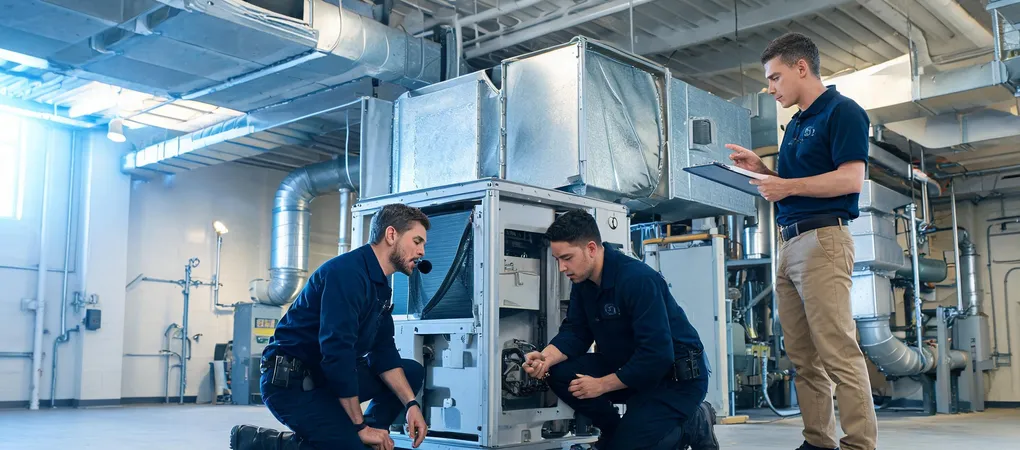
Picture the normal morning in an HVAC shop. One tech is on a roof, one is under a house, the dispatcher is juggling schedule changes, and a homeowner is standing next to a dead system describing a strange noise in words nobody will remember exactly by lunch.
Entrepreneur recently wrote about small business owners overseeing entire teams of AI agents. That is real. Owners are starting to manage digital workers that answer, summarize, draft, schedule, quote, remind, and route.
But here is the part most people are not saying out loud: an agent team is only as fast as the truth it can hear.
The Race Is Not Agent Count. It Is Reality Speed.
A small business owner does not need twenty AI agents arguing with each other in a dashboard. They need the first useful answer to reach the right person before the other shop becomes the safe choice.
In home service, the customer is often not shopping for poetry. The unit is down. The basement smells wrong. The tenant is angry. The parent is hot, cold, or worried.
- Fast: “We heard you. Here is what happens next.”
- Faster: “We heard the exact issue, matched it to the right tech, and carried the context into the visit.”
- Fastest: “The phone conversation, site notes, customer wording, equipment condition, and tech diagnosis become one memory the team can act on.”
That is the race. Not more software. Not prettier dashboards. The race is how quickly field reality becomes usable memory.
The First-Responder Advantage Is Not a Theory
Harvard Business Review published a well-known analysis of online lead response showing that companies contacting a potential customer within an hour were nearly seven times more likely to qualify that conversation than companies that waited longer than an hour. Compared with waiting a full day, the gap was more than sixty times.
You do not need to worship the exact number to feel the point. The person who responds first shapes the story. They define urgency, trust, next step, and price tolerance before anyone else enters the room.
“Speed is not a feature in field service. Speed is the first proof of competence.”
HVAC makes this brutal. Industry estimates put the U.S. HVAC market around $159 billion, with roughly 120,000 contractors and more than 400,000 technicians in the field. The Bureau of Labor Statistics also shows heating, air conditioning, and refrigeration mechanics as a large, growing skilled-trades workforce.
That means the battlefield is crowded. The truck that feels responsive wins confidence before the truck that has the better brochure gets to explain itself.
The Ear-to-Action Loop
Here is the model I use inside GMIC AI: the Ear-to-Action Loop.
- Hear: capture what the customer, technician, equipment, and site are saying in the moment.
- Remember: turn that spoken reality into searchable work memory.
- Route: move the right context to the dispatcher, tech, manager, or AI agent.
- Act: produce the service report, next step, work order detail, and customer follow-through without waiting for someone to reconstruct the day later.
This is where I think the AI agent conversation is going. The winning SMB owner will not be the one with the most agents. It will be the one whose agents have the freshest ground truth.
Pick the last urgent customer call. How long until your team had the full context they needed to act on it?
Not just the name and address. The customer’s exact words, the equipment history, the tech’s spoken diagnosis, and what was promised at the door.
AI Agents Are Fast. The Field Is Still Mute.
SaaS owns the back office. ServiceTitan, Housecall Pro, Jobber, Dynamics, and others organize workflow. They are important systems.
But they still depend on humans typing field reality after the fact. After the crawlspace. After the roof. After the last appointment. After the 11 minutes that evaporated between the wrench and the keyboard.
That gap is where speed dies. The AI agent can draft a perfect follow-up in seconds, but if it does not know what the tech actually found, it is just arranging stale information more neatly.
This is why we built Hearit.ai HA-MIC01 as the hands-free field ear, not as recording hardware. It captures spoken work at the customer’s door, in the bay, on the roof, beside the condenser, and turns that work into reports, work orders, and Frontline Work Memory the team can search and use.
Before Robots, The Technician Becomes The Sensor
Everyone loves talking about robots. Fine. Robots will come.
But the first Physical AI in field service rides with human workers. The technician becomes the sensor because the technician is already where reality happens.
- The customer detail: “It only rattles after the second cycle.”
- The senior tech pattern: “That board usually fails after water sits here.”
- The handoff clue: “Tell the next tech the access panel sticks unless you lift from the left.”
Those details are not paperwork. They are operating intelligence. And today, too much of that intelligence lives in tired memory, scattered texts, and vague work orders.
Telalive does the same at the customer conversation layer: voice capture for calls that becomes searchable customer memory. HA-MIC01 carries that memory into the field, where the diagnosis, repair context, and technician know-how actually appear.
The Economic Asset Nobody Owns Yet
Here is the operator-level point. Trucks depreciate. Tools wear down. Ads reset every month. But field memory compounds.
The diagnosis you paid for twice because the work order was vague is not just an annoyance. It is a sign that your company is failing to retain its own intelligence.
“The most valuable AI asset in a trade business is not the agent. It is the memory the agent is allowed to act on.”
This must be consent-first. Worker-controlled, work-only, transparent, and built around technician dignity. The goal is not surveillance. The goal is to stop wasting the skill that is already being spoken out loud every day.
The 30-year veteran whose pattern recognition walks out at retirement should not be the single container for your company’s best troubleshooting logic. The customer your tech can’t quite remember should not depend on someone scrolling through old notes in a driveway.
Where This Goes Next
AI agents will keep getting faster. They will schedule faster, summarize faster, quote faster, and coordinate faster. That part is obvious.
The less obvious shift is that speed will move from the office into the jobsite. The bottleneck will no longer be whether software can think. It will be whether your business can hear reality quickly enough to let the software act.
- Old workflow: customer talks, tech works, notes wait, office interprets.
- New workflow: customer talks, tech works, AI hears, memory updates, action starts.
That is the Field Voice Data Layer. Not a microphone category. Not a replacement for your SaaS. The missing input layer for field-service AI.
Robots need eyes. Field AI needs ears. And in the trades, the business that hears first is the business that moves first.
From AI phone agents to custom hardware — we’ve got you covered.