
The Agent Is Only as Good as the Mic Spec
AI agents are entering small business, but HVAC and trades need better field voice data first. The mic port is now a product strategy decision.
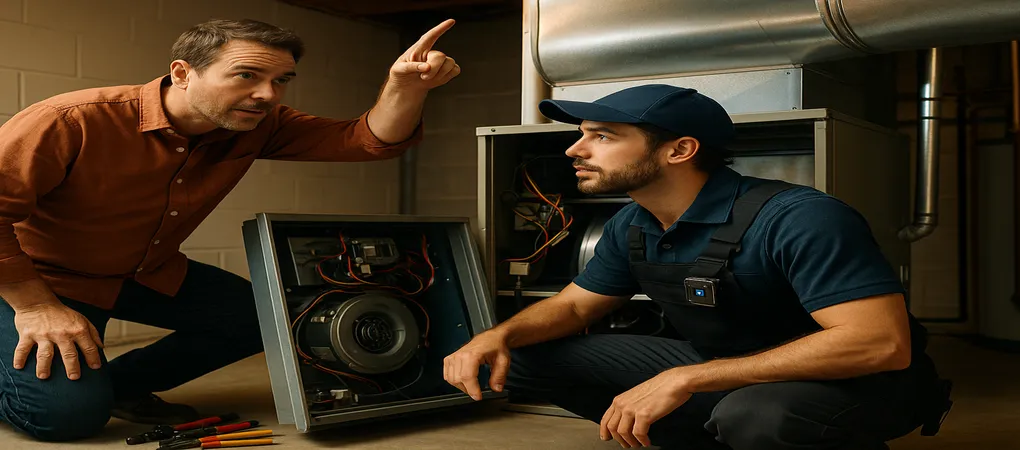
The tech is kneeling beside an air handler, phone wedged against a toolbox, while the customer explains the one detail that will matter next season. The work order later says, politely, almost nothing.
That is the part of AI agents for small business nobody wants to put on a slide.
Agents are moving downstream. Reality is not.
A recent Small Business & Entrepreneurship Council piece points to AI agents becoming mainstream for small businesses. Fine. That direction is correct.
But in HVAC, plumbing, electrical, inspection, and restoration, the agent does not fail because it cannot reason. It fails because the most useful facts were said once, near equipment noise, by a tired person wearing gloves.
ServiceTitan, Housecall Pro, Jobber, and Dynamics own the workflow. They are good at jobs, dispatch, invoices, customer records, and process.
Their weak spot is not ambition. Their weak spot is physics. They still depend on a human converting field reality into typed form after the fact.
An AI agent cannot act on the part of the job that evaporated before it reached the work order.
A common case: the useful detail lives in the wrong place
Take a common residential HVAC visit. The system is checked. The tech explains what was observed. The homeowner adds history: a noise at night, a room that never cools, a prior repair, a preference about replacing versus nursing the unit along.
Some of that makes it into the notes. Some becomes a checkbox. Some stays in the tech’s head until the next urgent job pushes it out. Very human. Not especially machine-readable.
- The SaaS record: job type, parts, invoice, status, maybe a summary.
- The field record: what was checked, what was explained, what the customer cared about, what the tech decided not to do yet.
- The agent’s problem: it can search the first record, but the second record is where the judgment lives.
This is where Hearit.ai HA-MIC01 fits our thesis: not as office equipment, but as a hands-free AI ear for permitted work conversations, designed to turn spoken job context into service reports, work orders, and searchable Frontline Work Memory.
Consent-first. Work-only. Transparent. The point is technician dignity, not employee theater with extra LEDs.
Pick the last return customer. Without checking the system, what did your tech say about the unit last visit? Now check the work order. Listen to the gap.
That gap is where small-business AI agents either become useful or become one more polite summarizer with clean formatting.
The ODM trade-off: mic opening versus field durability
For product teams building AI wearables or voice devices for skilled trades, one unglamorous decision matters early: where the microphone opening lives, and how exposed it is.
This is not a cosmetic choice. It sets the audio quality ceiling, the sealing strategy, the enclosure stack-up, the DSP burden, the cleaning procedure, and sometimes the certification plan. Naturally, it is often debated after the industrial design looks nice. Hardware enjoys irony.
Option 1: exposed, forward-facing mic port
A forward-facing port near the upper chest or collar can put the voice path in a favorable position. Better signal. Less guessing. Less compensation required from the model later.
The cost is exposure. Dust, sweat, mist, insulation fibers, wind, and cleaning chemicals become part of the design review. You may need a protective mesh, acoustic membrane, drain path, or replaceable cover, and each one changes frequency response.
Option 2: recessed or gasketed side port
A recessed port behind a gasket or membrane helps with sealing and abuse. It can be easier to wipe down and easier to protect during normal field handling.
The cost is acoustics. High frequencies can be attenuated. Clothing can rub across the opening. Body posture changes the voice path. Now firmware and DSP must clean up a signal the mechanical design already damaged.
Option 3: remote boom or tethered mic
A remote mic placed closer to the mouth can improve voice pickup in equipment rooms, crawlspaces, and windy exterior work. From an audio standpoint, this is attractive.
The field cost is acceptance. Cables snag. Booms get bent. Accessories disappear into trucks. The device can start to feel like a headset instead of a trade tool. That matters more than a lab chart admits.
What changes the answer
There is no universal winner. A good product requirement document should force the team to choose the job condition, not the fantasy condition.
- Noise source: blower motors, compressors, traffic, fans, and crawlspace movement create different problems.
- Body position: standing at a condenser is not the same as lying near a duct run.
- Garment interaction: collars, vest straps, jackets, and PPE can turn a perfect port into a scratchy mess.
- Consent signal: transparent recording indicators must be visible enough to be trusted without making the worker feel decorated like a small aircraft.
- Service model: a replaceable acoustic cover may help, but only if the team can actually maintain it in the field.
- SaaS target fields: if the downstream system needs model number, symptom, customer concern, and tech recommendation, the audio spec must protect those words first.
The engineering-grade point is simple: reconstruction can get cheaper, but it never becomes the original. Once the consonants are buried under fabric noise and blower rumble, the agent is negotiating with damage.
Specification beats clever cleanup. Decide the words that must survive, then design the mechanical and acoustic path around those words.
The durable rule
AI agents entering small business is the easy headline. The harder work is giving those agents permitted, accurate, field-born memory without asking technicians to become clerks after a long day.
For field-service SaaS, the next advantage is not another tab. It is the pre-work-order and post-dispatch reality that never fit neatly into a form.
For hardware product teams, the lesson is less fashionable and more useful: the AI product begins at the mic port, the gasket, the mount, the cable path, and the worker’s tolerance for wearing the thing all day.
A shop does not need an agent that sounds informed. It needs one that was actually present for the part of the job where the judgment happened.