
AI Guardrails Start at the Microphone
AI agents need more than software limits. In HVAC field work, microphone placement is a guardrail that decides what the agent can trust before it acts.
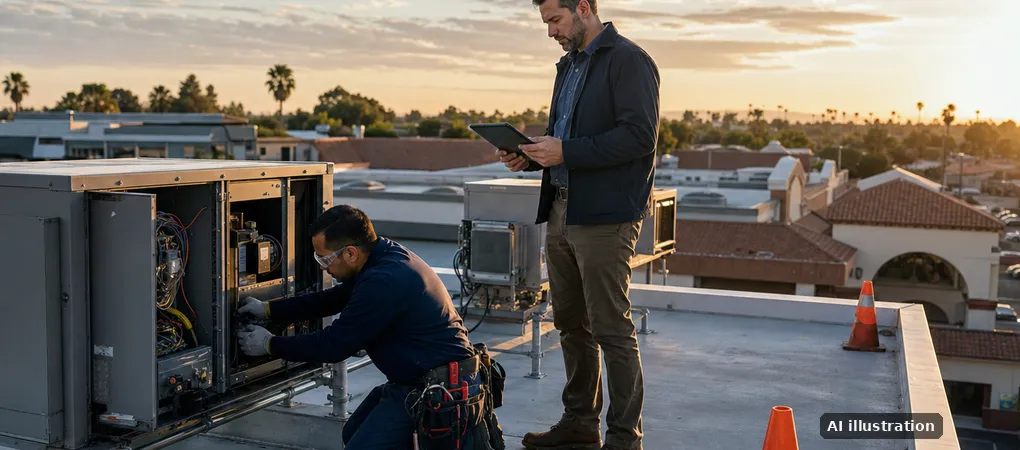
AI agents will move from office software into HVAC dispatch, quoting, parts prep, and report drafting faster than most shops are ready for.
The warning sign is not theoretical. A runaway automation loop can send a flood of emails before a human realizes the agent misunderstood the job it was doing.
In field service, the failure mode is quieter. The agent does not spam the world. It drafts from thin context.
The customer says the upstairs bedroom has been hot since the remodel. The tech checks static pressure, notices a crushed flex run, explains the trade-off, and promises to note the homeowner’s concern about drywall access.
Then the work order says: “Checked airflow. Recommend duct repair.”
Name the problem: acoustic authority
Software guardrails ask, “May the agent take this action?” Field AI has to ask something earlier: “Did the system hear the work clearly enough to reason from it?”
That is acoustic authority. It is the difference between a transcript-shaped artifact and a work memory the team can trust.
The cheapest AI mistake is stopped in software. The expensive one is baked into the input.
For a hardware product manager, this becomes a manufacturing decision, not a slogan. The concrete trade-off is microphone placement versus enclosure sealing.
The ODM trade-off: hear better, seal worse
Option one is an exposed acoustic port near the technician’s voice path: collar, chest, shoulder strap, or clipped wearable. It improves speech pickup and reduces the model’s need to guess through fan noise, attic echo, and tool vibration.
The cost is mechanical. Openings invite dust, sweat, insulation fiber, cleaning fluid, and warranty arguments. The enclosure team now has to design drainage, mesh, membranes, service access, and assembly controls.
- Exposed port: better voice path, higher contamination risk, tighter assembly tolerance.
- Sealed membrane: cleaner enclosure story, worse high-frequency detail, more DSP burden.
- Remote mic module: flexible placement, more connectors, cable strain, and field failure points.
What changes the answer? The jobsite. Rooftop HVAC pushes wind and UV. Crawlspace work pushes dirt and moisture. Plumbing pushes splash and awkward body posture. Electrical work may push PPE and tool clearance.
Pick the last callback from a vague work order.
Could a technician, manager, or AI assistant reconstruct what was checked, what was explained, and what was decided from the record you actually have?
Why this is an economic problem
The tool depreciates. The van depreciates. The searchable pattern memory of how your best people diagnose, explain, and hand off work compounds.
That is why Hearit.ai HA-MIC01 is designed around the field voice data layer: permitted, work-only context from the service visit, carried into reports, work orders, and memory the next team can search.
Not surveillance. Not a replacement for the technician. Not a substitute for professional review.
The near future of AI agents in skilled trades will not be decided only by better prompts. It will be decided by whether the physical input is clean enough, consented enough, and contextual enough for the agent to stay inside the lines.
Bring one de-identified work order or report and mark the fields your team struggles to fill after a long day. That gap is where the next AI guardrail begins: not at the send button, but at the moment the work is understood.