
AI Must Remember in the Shop’s Language
AI assistants are going global, but service businesses need memory in the language work happened. A plumbing audit for the record-language gap.
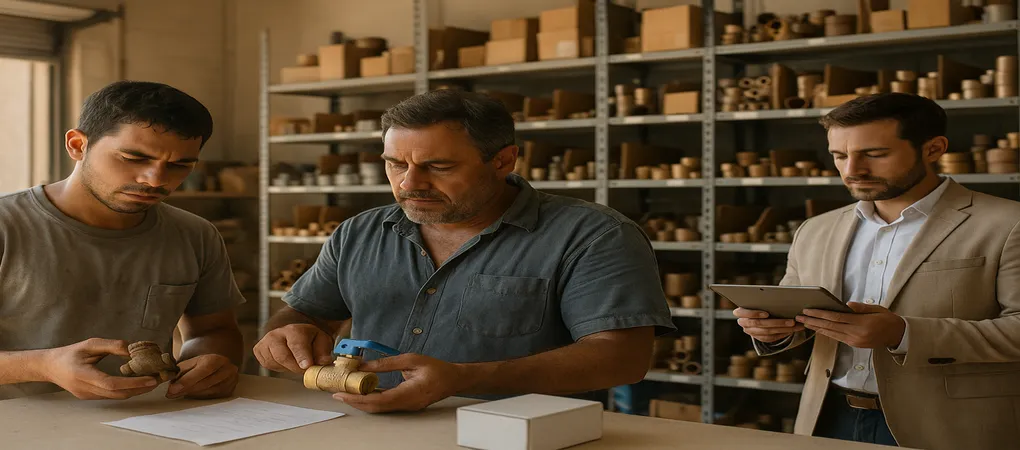
Everyone says an international AI virtual assistant launch means admin work is finally getting automated. For a plumbing manager, the harder problem is the opposite: the shop already has plenty of admin, but the record starts under a sink, in wet gloves, while the customer is talking.
Use this as a practical audit. By the end, you should be able to find where your company changes language, changes context, and thins out the memory of the job before any AI assistant ever sees it.
The trend: AI assistance is crossing borders
Agence MAO, based in Guadeloupe, announced an international launch of its AI virtual assistance suite for French-speaking tradespeople and small business owners. That matters beyond one company or one language market.
It points to the next useful phase of business AI: not just smarter assistants, but assistants that understand how work is remembered inside real companies. In the language of the customer. In the language of the technician. In the shorthand of the trade.
“AI should remember work in the language the work happened.”
The common myth is simple: once AI handles scheduling, email, documents, and reminders, the small business becomes more organized. Sometimes, yes. But that is only the clean end of the workflow.
The messy end is where the job record is born. And in trades, that birth often happens in a body position that makes documentation unnatural.
Illustrative example: the record breaks under the kitchen sink
A plumber is half inside a base cabinet. One shoulder is pressed against the dishwasher line. Gloves are wet. The homeowner is standing behind them asking whether the upstairs toilet could be related.
The plumber sees more than the final repair line will say. The shutoff is stiff. The supply line has early corrosion. The prior repair used the wrong fitting. The homeowner says the leak only shows after the dishwasher runs, not when the sink is used.
- What reaches the work order: repaired leak under kitchen sink.
- What may not reach it: condition of adjacent parts, customer words, reason for not replacing a component, and the next thing a senior tech would watch.
- What gets cleaned away: uncertainty, trade judgment, and the sequence that made the diagnosis credible.
This is the invisible problem. Call it the record-language fracture.
It is not only French versus English, or Spanish versus English, or Creole versus French. It is field speech versus office speech. It is customer wording versus invoice wording. It is the technician’s mental model versus the dropdown menu.
The myth: better admin fixes the memory problem
Better admin helps. AI virtual assistants can reduce repetitive office work and make small teams look more consistent from the outside.
But if the assistant receives a thin record, it becomes very good at organizing thinness. That is not a software failure. That is a memory supply problem.
Proof 1: the customer’s words carry diagnostic value
A homeowner rarely describes a plumbing issue like a technician. They say it smells after laundry. They say it happens only at night. They say the previous owner “had someone look at it.”
Those words are imperfect, but useful. When they are compressed into a tidy note, the next person loses the original shape of the complaint.
Proof 2: trade decisions happen before the form
The plumber decides whether to recommend replacement, monitor the part, call out a code concern, or leave a note for a future visit while their hands are busy. That decision may be spoken before it is typed.
If the only official memory is what gets entered later, the company is asking the technician to reconstruct judgment after the pressure has passed. Sometimes that works. Often it becomes shorter, cleaner, and less useful.
Proof 3: multilingual work adds a second compression
In many small service businesses, the job is discussed in one language, managed in another, and billed in a third style of language: formal, brief, safe. This is where international AI tools become interesting.
The point is not translation alone. The point is preserving meaning across the path from customer speech to field decision to office action.
Pick the last return plumbing customer. Without opening the system, what did the tech say the homeowner described last visit?
Now open the work order. Look for the gap between the customer’s words, the tech’s reasoning, and the final office note. That gap is where AI assistance will either get stronger or inherit the same thin memory.
A practical audit for service managers
Do not start by shopping for more AI features. Start by tracing one job from speech to record.
A useful audit asks five plain questions.
- Where is the first real explanation given? At the door, under the sink, in the truck, or on the phone with the office?
- Who hears the customer’s exact words? The dispatcher, the technician, a tenant, a property manager, or only one person who later summarizes it?
- When does the technician explain the decision? During the work, at payment, after photos, or at the end of the day?
- What gets translated? Language, trade shorthand, customer emotion, or technical uncertainty?
- What does the next tech need that the current form does not ask for? That is the field you should care about.
This is how AI for small business becomes real Enterprise Memory instead of prettier administration. Enterprise Memory is not a big-company phrase. It means the company can recall what its people learned while doing the work.
For a small trade shop, that memory is fragile. It lives in the senior plumber’s head, the office manager’s judgment, the customer’s phrasing, and the job notes nobody wants to write after a long day.
What a hands-free record can and cannot do
A consent-first, hands-free wearable can help at the exact moment the record usually gets thin. Voice can preserve the technician’s spoken observation. A body-worn view can show the cabinet, valve orientation, visible corrosion, and the part being discussed.
That is why Hearit.ai HA-MIC01 is framed as a field ear, not recording hardware: the useful output is work memory that can support service reports, work orders, and later search. The worker remains the decision-maker. The record carries context.
There are limits. A wearable cannot feel pipe movement, smell sewer gas reliably, know local code from sight alone, or diagnose a fault for the plumber. Background water, fans, masks, accents, and customer overlap can make capture harder.
It also should not become surveillance. Work-only memory needs clear consent, visible use, and worker control. The goal is not to watch people harder. The goal is to stop forcing them to rebuild the job from memory when the body of the work made typing impossible.
When this matters, and when it does not
This matters most when the job has judgment: recurring leaks, landlord-tenant communication, warranty questions, insurance documentation, aging systems, multiple visits, or a second technician taking over. It matters when customer wording changes the path of the diagnosis.
It matters less on simple, single-action work where the same tech completes the job, the parts are obvious, and the existing checklist already captures what the company needs. Not every task deserves heavier memory.
The better frame
The Agence MAO news is a signal that AI assistance is becoming more local, more multilingual, and more serious about the realities of small business. Good. But the strategic question for operators is not, “Which assistant can do more tasks?”
The better question is, “What memory will this assistant inherit?”
If your team wants to examine this before adding more automation, start with one de-identified work order or service report. Mark the fields that were hardest to capture while the work was happening, especially where customer words or technician judgment were compressed.
The next phase of AI at work will not be won by the assistant that speaks the most polished language. It will be won by the business that keeps the meaning of the work intact.