
Fast Reply Is Not the Finish Line
Goldman may validate local AI agents, but trades win when fast replies become clear work orders and searchable field memory for the next visit on site.
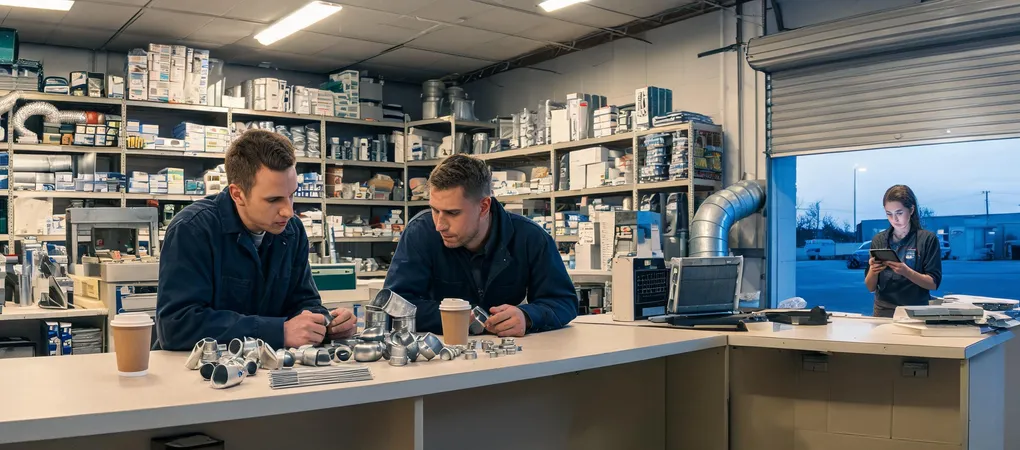
How fast does yesterday’s customer become today’s work order in your shop?
Forkast’s coverage of Owner betting that Goldman Sachs can validate the AI agent model for local business is timely. It tells every contractor the same thing: your competitor’s front desk is about to answer in seconds, not after the current job wraps up.
The myth: AI agents are a cheaper front desk
That frame is too small. In home services, speed-to-lead is not an admin upgrade. It is a race condition.
The first company to respond shapes the job. The second company explains why it is better.
- Speed has been measured: the Lead Response Management study associated with James Oldroyd found that contacting a prospect within 5 minutes versus 30 minutes produced dramatically higher qualification odds, often cited as 21x.
- Technician time is expensive: BLS lists HVACR mechanics and installers at a 2024 median wage of $28.75 per hour, before truck, benefits, training, and senior-tech premiums.
- The battlefield is large: HVAC alone is roughly a $159B U.S. market, with about 120k contractors and 425k technicians.
The better frame: reply speed must become work speed
A fast AI agent can greet the customer. Good. But the race does not end at hello. It ends when the exact customer words, the diagnosis, the parts, and the field context become action your team can use.
Pick yesterday’s most urgent customer call.
How many minutes passed before the tech had what the customer said, in their words, inside the work order?
Proof 1: two seconds can still ship a vague job
Your competitor’s AI answers in two seconds. Your dispatcher answers after a job, maybe two hours later. That gap is visible now.
But there is a quieter gap after the reply: the customer says “it rattles only when the heat kicks on,” and the work order becomes “noise issue.” That is the shipped-record gap.
Proof 2: note-taking taxes the highest-paid memory in the truck
If a tech spends ten minutes reconstructing notes after each stop, six stops becomes an hour of expert memory turned into typing. The wage is only the visible part. The harder cost is the callback from a vague work order and the diagnosis you paid for twice.
Human memory is not a database. Crawlspace, driveway, parts counter, next customer — details overwrite each other because that is how people actually work.
“The shop that remembers fastest moves fastest.”
Proof 3: field AI needs ears, not another dashboard
ServiceTitan, Housecall Pro, Jobber, and Dynamics own workflow. They still depend on humans to type reality after reality already happened.
That is why the missing category is the Field Voice Data Layer. Telalive can turn customer conversations into searchable customer memory. Hearit.ai HA-MIC01 brings the same idea onto the jobsite: spoken work in the bay, on the roof, at the unit, becoming a service report and Frontline Work Memory.
The first Physical AI rides with the technician
Robots need eyes. Field AI needs ears. Before a robot replaces the crawlspace visit, the technician becomes the sensor.
Consent matters here: worker-controlled, work-only, transparent. The point is not watching people. The point is protecting the work they already know how to do.
Goldman may help validate the agent model for local business. Fine. The contractor advantage will belong to the shop where fast response becomes fast memory, fast dispatch, and a clearer work order before the next truck rolls.
From AI phone agents to custom hardware — we’ve got you covered.