
The Front Desk Cost Test for HVAC Shops
A practical cost comparison of a $35k-$45k receptionist vs a $200 AI phone agent, and why HVAC shops still need voice memory from the field instead of typing.
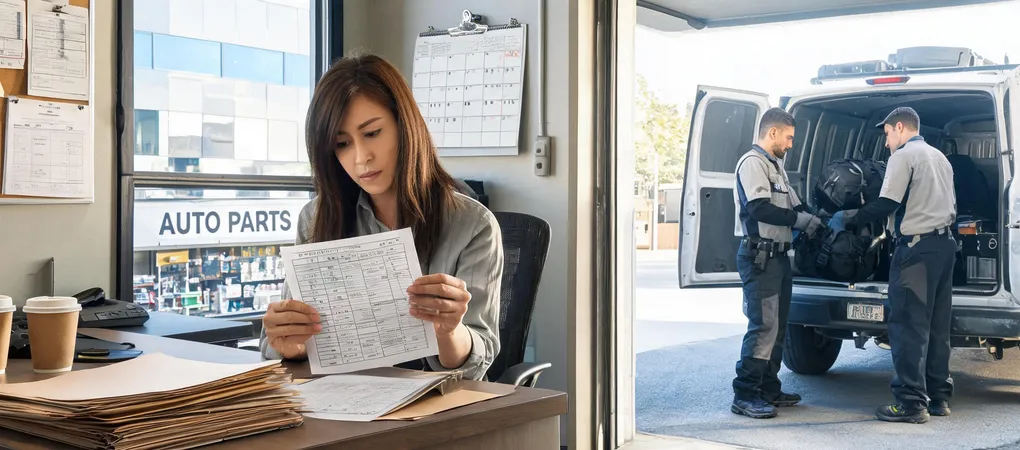
$45,000 is a reasonable front desk line item until you look at what the seat is actually doing at 4:40 p.m.: copying a customer’s words from a call into one system, confirming a window by text, asking a tech to clarify a vague note, then trying to remember which homeowner mentioned the furnace closet was behind the laundry room.
That is not one job. It is intake, translation, scheduling, memory, and cleanup, all compressed into one person who also needs lunch, sick days, training, patience, and eventually a replacement.
- Trend worth noticing: EZContact’s move to bring AI-powered WhatsApp and voice engagement to U.S. Hispanic small businesses is part of a practical shift: AI is moving into the front desk because the front desk is where spoken business becomes operational memory.
For HVAC shops, plumbing companies, and electrical contractors, the question is no longer whether AI can answer a basic customer conversation. The question is where human payroll should be spent when a $200/month system can handle the repetitive intake layer.
Myth: the front desk problem is solved by hiring another person
That is the old frame. When call volume, WhatsApp messages, scheduling changes, warranty questions, and bilingual customer conversations pile up, the instinct is to add another receptionist.
But the better frame is simpler: what information needs to enter the business, and how much human judgment does that step actually require?
Pay people for judgment. Let machines keep the memory.
That principle outlives the current AI tool cycle. It is true for the front desk. It is true for dispatch. And it is especially true in the field, where the most valuable facts are still spoken next to equipment and then retyped later with tired hands.
The real cost of a human receptionist
The U.S. Bureau of Labor Statistics reported median annual pay for receptionists at about $36,590 in 2023. In a real small business, the all-in seat usually lands closer to $35,000 to $45,000 once you include the parts that do not show up neatly in the hourly wage.
Here is the breakdown most owners already know, even if they do not write it this way.
- Base pay: $17 to $21 per hour becomes roughly $35,000 to $44,000 annually for full-time coverage.
- Payroll taxes and benefits: employer payroll taxes, insurance contribution, retirement match, or basic benefits add real cost even in a lean shop.
- Training time: someone has to teach the software, call style, warranty language, brand names, neighborhoods, financing terms, and how your techs actually work.
- Sick days and PTO: the desk still has to function when the person is out. That means owner coverage, dispatcher coverage, or overtime pressure somewhere else.
- Turnover: SHRM has reported average cost-per-hire around $4,700. Even if your number is lower, replacement is never free. The old context walks out; the new person starts from zero.
None of this means receptionists are not valuable. The opposite is true. A good front desk person knows customer tone, tech capacity, neighborhood patterns, and when a small detail is about to become a bad afternoon.
But a lot of the desk is not judgment. It is capture. It is routing. It is repetition. Paying $40,000 a year for humans to act as copy-and-paste memory is bad design.
What AI actually does for $200/month
A practical AI phone agent today costs roughly $100 to $300 per month. Use $200/month as the center of the math: $2,400 per year.
For that price, the system can answer common questions, collect customer details, capture job context, route urgent requests, create summaries, support bilingual conversations, and keep a searchable record of what was said in the customer’s own words.
- Availability: it works 24/7 without overtime.
- Consistency: it asks the required questions every time.
- Volume: it can handle 10x the conversation load without making customers wait in a line.
- Memory: it keeps the exact customer context available for the next person who touches the job.
- Reliability: it does not take sick days, does not need retraining after vacation, and does not forget the script during a busy morning.
This is where Telalive fits for service businesses: customer voice becomes searchable conversation memory instead of scattered notes, half-typed summaries, and “I think she said…” follow-up. For bilingual shops, especially those serving Hispanic small-business communities, that matters because language is not just translation. It is trust plus exact detail.
Add up your receptionist’s salary, benefits, sick days, training time, and replacement risk. What is the real number?
Then ask a second question: which parts of that number require human judgment, and which parts are just spoken information entering the business?
Look, the AI agent will not calm down an angry homeowner with the same human warmth as your best office manager. It will not notice that a senior tech is overloaded just by the way he drops his keys on the counter.
So do not use it that way. Use it to remove the mechanical layer so the human layer has room to breathe.
The math that makes the decision obvious
A full-time receptionist costs about $35,000 to $45,000 per year. An AI phone agent costs about $1,200 to $3,600 per year. The middle of the comparison is $40,000 versus $2,400.
That is not a small efficiency difference. That is a different cost structure.
- Human receptionist: $35,000 to $45,000 per year, business-hours coverage, variable consistency, human judgment when trained well.
- AI phone agent: $100 to $300 per month, 24/7 coverage, consistent intake, 10x volume capacity, searchable memory.
- Better allocation: keep humans on exceptions, scheduling judgment, customer care, parts coordination, and decisions that require taste.
The obvious answer is not always “remove the person.” Many shops still need a human voice during complex moments. The obvious answer is: stop buying full-time payroll for repeatable intake when a machine can capture it cleanly.
The front desk was never only a person. It was an input layer wearing a headset.
The spreadsheet hides the second half: the jobsite
Here is where most front desk AI discussions stop too early. They solve the customer conversation, then assume the business memory is fixed.
But in HVAC, the highest-value facts are not only at the front desk. They happen in the attic, on the roof, in the crawlspace, at the panel, at the customer’s door, and in the technician’s spoken explanation before the next job pulls attention away.
- The callback from a vague work order: the diagnosis was probably made, but not captured with enough detail.
- The customer your tech cannot quite remember: not because the tech is careless, but because human memory compresses under load.
- The 11 minutes between the wrench and the keyboard: that is where exact language turns into “checked system, working now.”
- The 30-year veteran retiring: pattern recognition leaves if the business never captured how he talks through a problem.
This is why I do not see Hearit.ai HA-MIC01 as recording hardware. It is the field ear for the business: a worker-controlled, work-only way to capture spoken job reality and turn it into service reports, work orders, and searchable Frontline Work Memory.
ServiceTitan, Housecall Pro, Jobber, Dynamics—these systems own workflow. But workflow software still depends on humans typing reality into boxes after the work has already happened. The field needs an input layer that hears the work when the work is being done.
Robots need eyes. Field AI needs ears.
HVAC is the first battlefield because it is large, fragmented, and intensely verbal. The U.S. HVAC services market is commonly estimated around $159 billion, with roughly 120,000 contractors and about 425,000 technicians in the field. That is a lot of spoken diagnosis, repair logic, customer nuance, and equipment context disappearing into memory every day.
The first Physical AI in this market will not be a robot climbing into the crawlspace. It will ride with the human worker. The technician becomes the sensor, and the HA-MIC01 becomes the ear that turns field reality into usable memory.
The durable rule
The EZContact news is timely because it shows AI entering small business through the channel owners already use: voice and WhatsApp. That is practical. It is not a science project.
But the deeper rule is bigger than the front desk: every service business is becoming a memory business. Customer memory at intake. Field memory at the equipment. Work memory across visits.
Human cognition was not designed to preserve every detail after ten hours, six jobs, two supply runs, and one homeowner explaining a noise that only happens on cold mornings. People compress. Systems should remember.
The receptionist math is obvious because $200/month beats $40,000/year for repeatable intake. The field math is next: the business that captures reality at the source will run with less rework, cleaner invoices, stronger training, and fewer conversations that start with “what happened last time?”
The front desk is not disappearing. It is being unbundled. And the real company memory is finally getting ears.
From AI phone agents to custom hardware — we’ve got you covered.