
Goldman Validates Agents. Field AI Needs Ears
Goldman may validate AI agents for local businesses, but field service needs the missing input layer: memory that hears phone calls, jobsites, and handoffs.
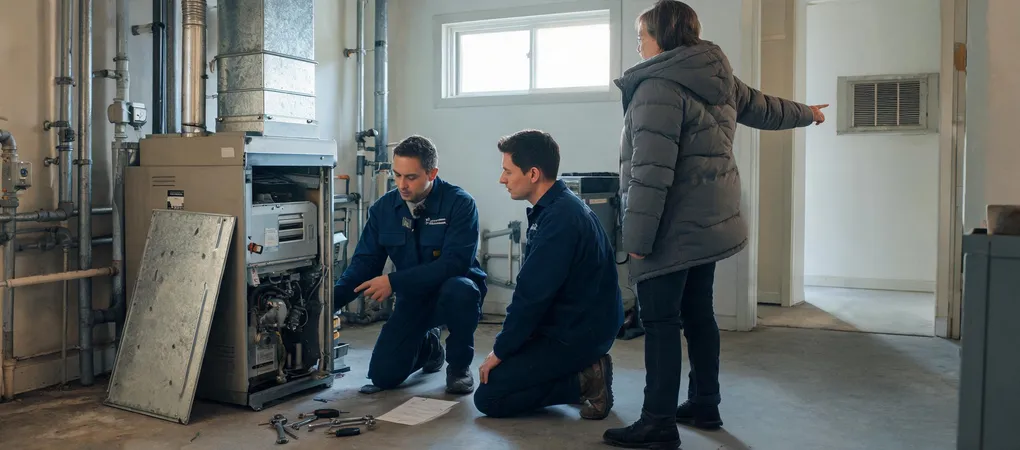
Roughly 425,000 HVAC technicians work in the U.S., and on a normal Tuesday the richest data in that workforce is spoken once beside a unit, then thinned into a few typed lines after the job.
You know the moment. A customer calls back about the system you serviced last week, and the work order says, “checked noise, advised monitor.” The tech remembers the house. Maybe the dog. Not the exact sound, not the homeowner’s words, not the small clue about the breaker panel that mattered.
“The next local-business AI battle is not only who answers. It is who remembers.”
That is the part I think many people are under-reading in the recent attention around Owner and Goldman Sachs. The headline says institutional money is taking the local-business AI agent model seriously. Fair.
But the bigger signal is not “every local business gets an agent.” The bigger signal is that AI is moving from toy chat into the operating rhythm of small businesses, where details decide whether a team looks sharp or sloppy.
The myth: the AI agent is the finish line
The common take is simple: AI agents will answer, book, follow up, and run the front office for local businesses.
That take is useful, but incomplete. An agent without memory becomes another polite surface. It can sound competent while still depending on a thin, partial record of what actually happened.
- The better frame: an AI agent is only as useful as the business memory it can hear, structure, and retrieve.
Proof 1: Phone conversations are not admin. They are customer memory.
A customer phone call contains the way people describe problems before a technician translates them into trade language. “It rattles after dinner.” “The back bedroom never cools.” “Last time your guy said the filter rack was strange.”
That language matters. Telalive exists for this layer: customer phone conversations becoming searchable conversation memory, not just a scheduling event that disappears into a calendar.
Before, the team sees a name, a time slot, and a short note. After, the team sees the customer’s own words, prior concerns, access details, comfort preferences, and the thread that connects one visit to the next.
That is not a nicer voicemail transcript. It is the beginning of an enterprise memory for a shop that used to depend on whoever happened to remember.
Proof 2: Workflow software does not hear the jobsite.
ServiceTitan, Housecall Pro, Jobber, Dynamics, and similar systems organize work. They route, price, invoice, and report. They are important.
But they still depend on a human translating field reality into clean fields after a long day. A wet crawlspace, a nervous homeowner, a strange vibration, a part that looked almost right but not quite — the system only knows what someone types.
Pick the last return customer. Without checking the system, what did your tech say about the equipment last visit?
Now check the work order. Listen to the gap between what was known in the field and what survived into the record.
The cost math is not abstract. The Bureau of Labor Statistics put median HVAC pay at about $27.55 per hour in May 2023, before loaded cost, van time, parts coordination, and the manager’s attention.
When a vague work order forces a second diagnosis, you are paying again for knowledge the business already had. The problem is not laziness. The problem is that the 11 minutes between the wrench and the keyboard were designed to evaporate.
Proof 3: Physical AI arrives first on a human collar, not a robot chassis.
The strategic trend is clear: AI is moving from screens into physical work. Cameras gave AI eyes. Warehouses, roads, stores, and factories all taught the industry that sight changes what software can do.
But skilled trades are not only visual. HVAC work is sound, sequence, smell, vibration, customer explanation, and technician judgment spoken under pressure. A model designed in a clean browser still has to survive a crawlspace.
That is why the Hearit.ai HA-MIC01 is not “recording hardware.” It is the ear of AI on the jobsite: a hands-free field input layer that captures spoken work at the moment it happens and turns it into service reports, work orders, and searchable Frontline Work Memory.
- Not a replacement: the technician still owns the judgment.
- Not surveillance: the memory must be consent-first, transparent, work-only, and respectful of technician dignity.
- Not a workflow takeover: the point is to feed the systems that already run the business with field reality they cannot hear today.
What changes when every call becomes a profile?
The U.S. HVAC market is estimated around $159 billion, with roughly 120,000 contractors competing in a trade where trust is built in small details. The owner who remembers those details feels different to the customer. The tech who arrives with context works differently.
A call becomes more than a call. It becomes a living customer profile: the way the customer describes comfort, the room that always acts up, the prior advice, the equipment history, the site constraints, the exact phrases that may matter next time.
A field conversation becomes more than a note. It becomes a searchable work memory: what the apprentice heard from the senior tech, what the customer approved at the door, what the equipment sounded like before the fix, what needs attention on the next seasonal visit.
And a 30-year veteran’s pattern recognition stops being trapped in one person’s head. Retirement still happens. But the phrases, observations, and diagnostic habits that shaped the shop can become part of the operating memory younger techs learn from.
The validation Goldman cannot provide
Capital can validate that AI agents are becoming real business infrastructure. It cannot validate whether a local business has the input layer those agents need.
That validation happens in the ordinary moments: the handoff after a tough job, the customer detail that resurfaces at the next visit, the diagnosis that does not need to be paid for twice because the first one was captured clearly.
The agent race will get louder. The quieter advantage will belong to the businesses that can ask, “What did we already know, in their words, at the moment it was said?”
AI does not make a trade business smarter by sounding human. It makes the business smarter when the work stops disappearing.
From AI phone agents to custom hardware — we’ve got you covered.