
The Handoff Memory Test for AI Agents
AI agents are entering small business, but HVAC teams need field memory: site facts that survive the report, support quotes, and guide the next visit.
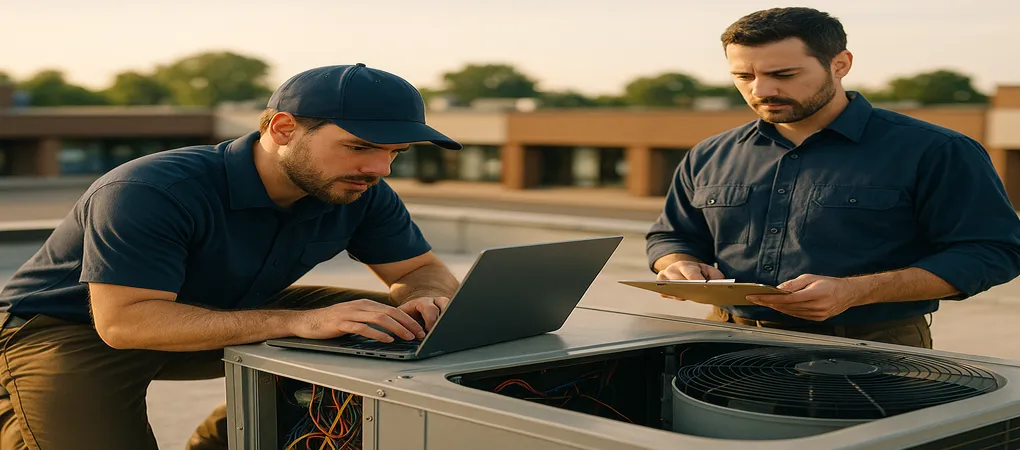
Everyone says AI agents are moving into the small business mainstream. The real constraint is the opposite: in HVAC and skilled trades, agents are about to hit the wall of what the business forgot to write down.
Use the Handoff Memory Test: can a field fact travel from site → report → next visit without being rebuilt from a tired technician’s memory?
The Handoff Memory Test
You know the moment. A tech finishes a long HVAC day, sits in the truck, and turns ten minutes of real judgment into three short lines: “checked system, customer advised, monitor.”
- Site Proof: what was observed, heard, tested, explained, and decided at the unit.
- Report Spine: the evidence that makes the invoice, quote, and warranty note defensible.
- Return Context: what the next technician needs so the customer does not have to retell the job.
Pick the last return HVAC customer.
Before opening your system, what did the tech say at the unit last time? Now check the work order. Listen to the gap.
Why the consensus is too software-heavy
The mainstream AI-agent story assumes the useful work starts inside software. But field service starts in heat, noise, crawlspaces, roofs, basements, and conversations with homeowners standing three feet away.
Proof 1: Site judgment disappears first
A senior tech hears a blower wheel rub, notices the customer’s concern, explains the tradeoff, and decides whether to monitor or quote. By evening, memory compresses sequence, uncertainty, and tone into a note that looks clean but carries little context.
Proof 2: Reports thin out the evidence
The quote needs why, not just what. If the report lacks what was checked at the unit, the office has to chase context, the manager has to interpret fragments, and the customer sees a recommendation without the story behind it.
Proof 3: The next visit reveals the debt
A different tech arrives, opens the prior work order, and starts reconstructing. The homeowner remembers the conversation better than the system does. That is not an AI problem yet. It is a memory problem.
“People do not remember like archives. They remember for action, then compress everything else.”
The field voice data layer
At Hearit.ai, HA-MIC01 is being built as the hands-free field ear for this handoff: permitted spoken work, tied to the job, shaped into service report drafts, work orders, and searchable Frontline Work Memory for professional review.
This is not employee watching. It is worker-controlled, work-only memory, meant to preserve the technician’s judgment with dignity. The human still diagnoses. The record carries context.
For pilot conversations, the useful artifact is simple: a de-identified work order or service report, with the fields marked that are hardest to carry from site to report to next visit.
The next serious AI agent in the trades will not begin with more automation. It will begin with a handoff the business can finally remember.