
The HVAC Shop Needs Memory, Not More AI
AI voice receptionists are only the start. The next layer is Enterprise Memory: calls, customer words, tech notes, and field facts searchable when jobs return.
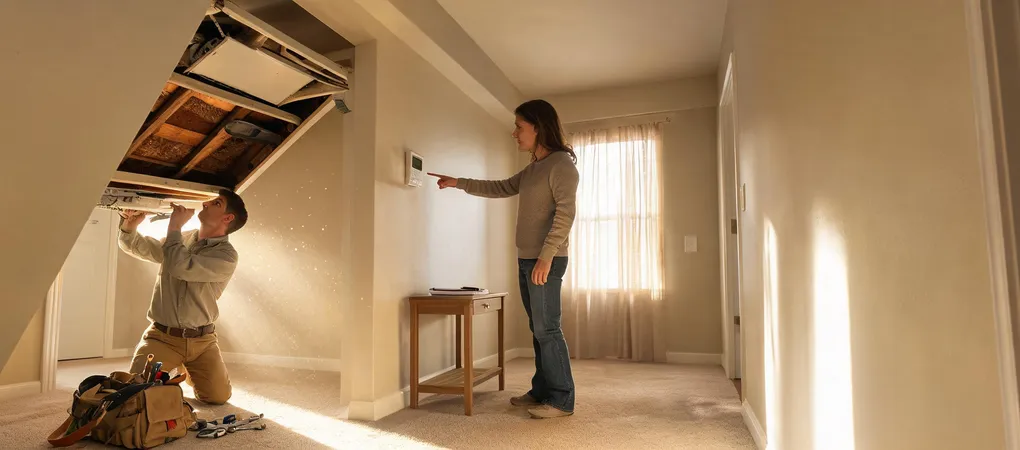
What did that customer say last Tuesday about the upstairs unit—the rattling, the baby’s room, or the breaker panel?
You know the feeling. The truck is already rolling, the work order is thin, and the detail you need is trapped somewhere between a phone conversation, a hallway chat, and a tech’s tired memory.
The myth: AI voice receptionists are just front-desk automation
The recent wave of AI voice receptionist systems for home service contractors is real. It is also being framed too small.
The common take is that AI answers, routes, schedules, and reduces front-office pressure. Useful, yes. But not the main event.
- The better frame: every conversation is a piece of operating memory.
- The problem to name: the business is not short on software; it is short on recall.
- The category: Enterprise Memory, starting with the voice of the customer and the voice of the field.
A call is not just a call. It is the customer describing the symptom in their own words, before anyone compresses it into a dropdown.
Proof one: conversations carry the details systems throw away
Most business systems are built around forms. Forms are clean, but real work is messy.
A homeowner says the noise only happens after dinner. A property manager mentions the side gate sticks. A repeat customer says, casually, that the last tech warned them about a weak capacitor.
“Enterprise Memory is not a bigger database. It is what they said in their words, searchable next visit.”
This is where Telalive fits naturally. Voice capture on customer calls can turn spoken context into searchable customer conversation memory, so the next person is not starting from a flat note that says “AC issue.”
Pick the last return customer.
Without checking the system, what did your tech say about that home last visit? Now check the work order. Listen to the gap.
Proof two: the field is still the blind spot
Back-office SaaS owns the workflow. AI owns more of the reasoning. But the roof, crawlspace, mechanical room, attic, and customer doorway still have a problem: they do not automatically become memory.
That is the 11 minutes that evaporated between the wrench and the keyboard. It is the shift handoff where context died. It is the diagnosis you paid for twice because the work order was vague.
Hearit.ai HA-MIC01 is built for that gap. Not as another screen for a technician to babysit, but as the hands-free field ear that captures spoken work at the moment it happens and turns it into service reports, work orders, and Frontline Work Memory.
Consent matters here. This has to be transparent, work-only, and worker-controlled, because the goal is technician dignity, not employee watching.
Proof three: HVAC is where this becomes real first
HVAC is a good first battlefield because the work is physical, distributed, and knowledge-heavy. The U.S. HVAC market is roughly $159 billion, with around 120,000 contractors and about 425,000 technicians in the field.
Those numbers matter less than the daily truth behind them. A senior tech hears a compressor for three seconds and knows what a junior tech may need three visits to learn.
- Before: customer context sits in fragments across calls, notes, invoices, and memory.
- After: every call and site conversation becomes part of a structured customer profile.
- Before: tribal knowledge walks out when a 30-year veteran retires.
- After: patterns become searchable work memory for the next technician.
This is not about replacing field-service SaaS. ServiceTitan, Housecall Pro, Jobber, Dynamics, and others are where work gets organized; the Field Voice Data Layer is how reality gets into those systems without asking exhausted humans to reconstruct the day from memory.
The reframe: AI needs ears before it gets legs
Cameras made AI better at seeing. But field service is full of sound, speech, judgment, complaints, warnings, and small spoken facts.
Robots need eyes; field AI needs ears.
And the first Physical AI will not arrive as a humanoid walking into the attic. It will ride with the human worker, because the technician is already the best sensor on the jobsite.
The winning AI system in home service will not be the one that simply talks the most. It will be the one that remembers what the business already heard.
From AI phone agents to custom hardware — we’ve got you covered.