
Where the No-Cool Call Loses Its Memory
A routine no-cool call contains more knowledge than the final invoice shows. The useful record is spoken at the condenser, the air handler, and the customer’s door.
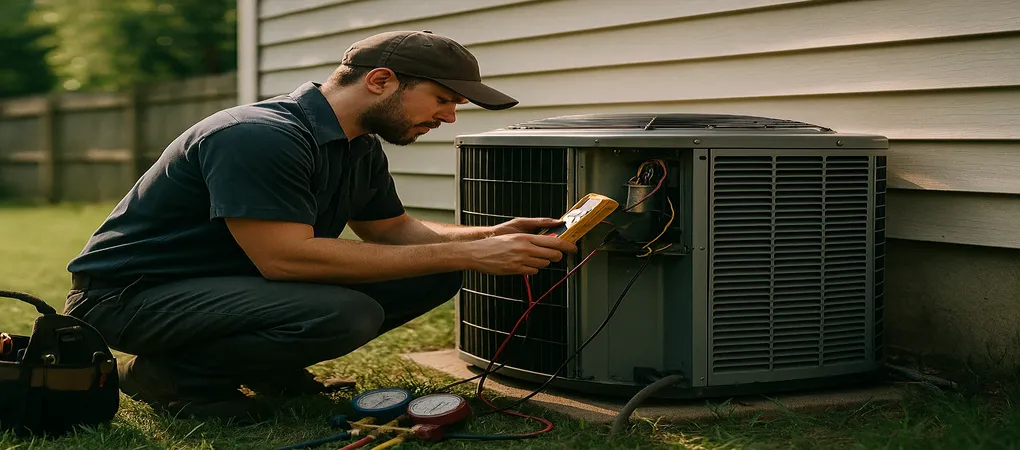
The summer no-cool call usually starts with a thin dispatch note: system not cooling, homeowner says the unit is running, wants service as soon as possible. That note is enough to send a technician. It is not enough to preserve what the call actually teaches.
A routine residential no-cool visit contains a surprising amount of useful knowledge. Some of it is electrical. Some of it is airflow. Some of it is customer history. Much of it is spoken once, while the technician is standing beside the condenser, leaning into the return grille, or explaining the repair at the front door. If it is not captured then, it often becomes a few words typed into the work order later: replaced capacitor, checked operation.
That is not a record of the call. It is a receipt for the ending.
The call as it runs today
The first real information arrives at the door.
The homeowner may say the thermostat was lowered but the house kept drifting warmer. They may say the outdoor unit hummed, the fan did not spin, the breaker was reset, or the system cooled for a short time and then quit again. They may mention that a capacitor was replaced before, that the filter was changed recently, that the attic access is tight, that a condensate switch has tripped in the past, or that another company added refrigerant. None of that is noise. It changes how the technician thinks about the call.
A careful technician will verify the thermostat is calling, then start outside if the complaint points that way. At the condenser, the work becomes methodical. Check the disconnect. Confirm line voltage. Observe whether the contactor is pulled in. Listen for the compressor and fan. Look at the contactor points for pitting or chatter. Inspect the capacitor for swelling, oil, loose terminals, or readings outside its rating. Check the condenser fan motor, compressor terminals, wiring, and any obvious rub-outs or burnt connectors. Look at the coil face for lint, grass, cottonwood, or a mat of dirt that would drive up head pressure once the unit runs.
If the outdoor unit is dead, the technician has to separate the problem: no high voltage, no low-voltage call, failed contactor, open safety, bad capacitor, failed motor, compressor issue. If the unit runs, the next question becomes performance. Are the suction and liquid lines behaving as expected? Is the suction line sweating normally or frosting? Does the system stabilize after the condenser coil is rinsed? Do the refrigerant readings make sense for the metering device and indoor load, or is the real issue poor indoor airflow?
That leads inside. The technician checks the thermostat setup, batteries if applicable, mode, schedule, and whether the call for cooling is actually present at the equipment. The filter matters immediately. A collapsed, loaded, or wrong-size filter can make a no-cool call look like a refrigerant problem. The blower has to run at the correct speed. The evaporator coil may be iced, dirty, or starved for airflow. The drain line and pan matter because an overflow switch can interrupt the call. Return and supply conditions, including the supply-to-return delta-T, help confirm whether the system is moving heat or just making noise.
The diagnosis conversation then begins. On a common call, the technician may explain that the outdoor section was not starting because the dual run capacitor was out of rating, that the contactor is worn but still operating, that the condenser coil is restricted and should be cleaned, and that the refrigerant charge should not be adjusted until airflow and coil condition are corrected. Or the technician may say the capacitor got the unit running, but the compressor start behavior, contactor condition, or fan motor amperage should be watched.
The homeowner then decides what to do now and what to defer. Replace the failed capacitor. Add a hard-start kit only if appropriate for the equipment and symptoms. Replace a suspect contactor now or note it for the next maintenance visit. Wash the condenser coil. Leave a deeper evaporator cleaning for a scheduled return. Decline an optional repair. Ask whether the part is under warranty. Ask whether repeated capacitor failures point to another problem.
Finally, paperwork is completed. The invoice might list the part, a brief diagnostic note, and a line that the system was tested. The customer signs. The technician moves on.
The administrative record looks finished. The field record is often much larger than what survives.
The exact moment knowledge is spoken and lost
The most valuable part of the call is not always the final diagnosis. It is the reasoning that narrowed the call.
At the condenser, the technician may say that the contactor was pulling in, line voltage was present, the fan side of the capacitor tested weak, the compressor side was within rating, the fan motor shaft spun freely, and the unit started after the capacitor was replaced. That is a chain of evidence. Later, it may become capacitor bad.
Inside, the technician may say that the filter was clean, the blower was running, the evaporator coil was not iced, the drain safety was not open, and the supply-to-return split looked acceptable after the outdoor repair. That means airflow was checked and a frozen coil was ruled out. Later, it may become checked indoor operation.
At the door, the homeowner may say that a capacitor was replaced once before, the breaker tripped recently, the outdoor fan had been slow to start, and a full coil cleaning was declined for now. The technician may explain that the system is cooling after the repair, but the contactor is worn and should be inspected at maintenance. Later, it may become customer declined recommendations.
Those are not small losses. They are the difference between a callback handled with context and a callback handled as a fresh mystery.
What changes when the speech becomes the record
Voice capture changes the record because it captures the work while the work is being reasoned through.
The technician does not need to write a novel at the condenser. A spoken field note can be simple and trade-specific: thermostat calling, contactor pulled in, high voltage confirmed, capacitor out of rating on fan side, replaced dual run capacitor, fan and compressor started, condenser coil dirty, rinsed coil, pressures stabilized, no refrigerant added. That sentence preserves sequence, tests, action, and restraint.
Another note inside might say: filter acceptable, blower running, evaporator coil not frozen, drain line clear, float switch closed, delta-T acceptable after outdoor repair. Now the record shows that the no-cool complaint was not treated as a single-part swap. The basic indoor checks were performed and documented.
At the door, the captured note may include the customer-facing facts: homeowner reported prior capacitor replacement, approved capacitor replacement today, declined contactor replacement for now, wants condenser coil condition reviewed at next maintenance, attic access requires notice, pets must be secured before entry. This is operational information, not decoration. It helps dispatch, service management, and the next technician.
The important shift is not that speech is recorded for its own sake. Raw audio by itself is not the goal. The useful outcome is a structured service record: symptom history, equipment observations, readings, parts replaced, items ruled out, customer decisions, and follow-up recommendations. A system such as GMIC AI sits in that narrow place between conversation and documentation, where the technician’s spoken trade knowledge can be turned into a usable job record without asking the technician to reconstruct the call from memory at the end of the day.
There are limits. Shops still need standards for what technicians should say aloud. Private customer information has to be handled carefully. The technician should review the final note because trade shorthand can be misunderstood. Voice capture is not a substitute for good diagnostics. It is a way to keep good diagnostics from disappearing.
What the owner sees afterward
The owner does not just get longer notes. Longer notes can be their own problem. The value is in a cleaner account of what happened.
On a callback, the office can see that the capacitor was replaced, the condenser coil was dirty, the contactor was worn, the indoor coil was not frozen, the blower was running, and no refrigerant was added. That changes the second visit before the truck rolls. The next technician knows what was proven and what was only suspected.
During quality review, a service manager can see whether no-cool calls are being diagnosed in the right order. Are technicians confirming voltage before replacing parts? Are they checking airflow before adjusting charge? Are they documenting customer declines clearly? Are deferred contactors, dirty coils, and questionable fan motors turning into repeat calls?
For warranty and maintenance, the record is also stronger. If a part fails again, the company can see prior symptoms and prior readings. If a maintenance customer delays coil cleaning or ignores a weak contactor, the next conversation starts with history instead of opinion. If dispatch needs to prepare a return visit, access notes and prior approvals are visible without calling the technician after hours.
The ordinary no-cool call will remain ordinary. A capacitor will fail, a contactor will pit, a filter will load up, a drain switch will open, a coil will get dirty, and a homeowner will need a clear explanation. The difference is whether the company keeps only the invoice line or keeps the thinking that led to it.
The work already contains the record. It is spoken at the unit and at the door. The question is whether the business lets that record evaporate before it reaches the office.