
The Speed Problem SMBs Haven’t Named
AI voice receptionists change speed-to-lead. The bigger shift: whoever turns customer conversations into work memory now sets the pace.
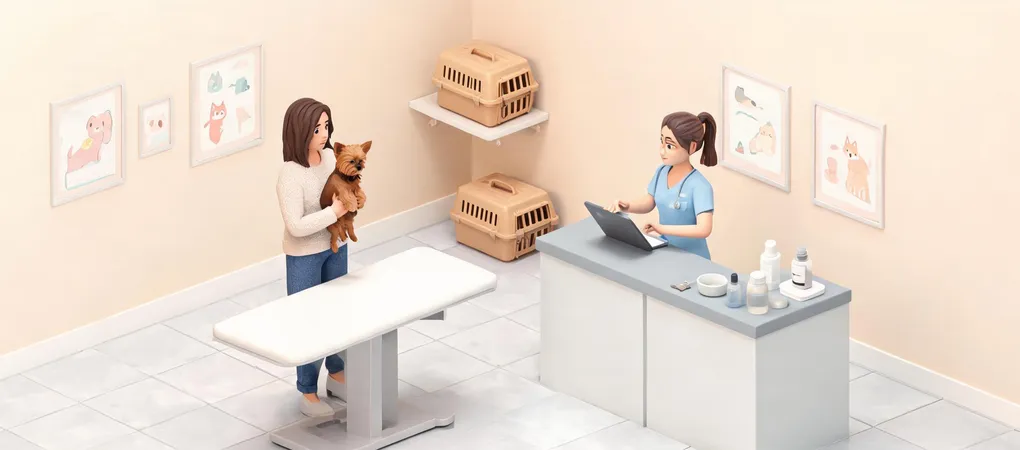
It is 4:47 p.m. at a veterinary clinic. A worried pet owner describes the limp, the medication, the timing, and the part about the stairs.
One clinic answers in seconds with an AI voice receptionist. Another calls back after the kennel room quiets down. By then, the customer has already moved.
- Name the problem: context latency.
- The old problem: who picked up.
- The new problem: who understood, remembered, and acted first.
The Race Is Not About Phones
The vcita and PickMyCall AI voice receptionist launch is one more signal that the front door of local business is changing. Fine. Useful. Expected.
But the category is not really phone automation. It is response speed plus memory. The business that can hear the customer, capture the facts, and route the next action in seconds is running a different race.
“Speed is no longer a staffing trait. It is a memory trait.”
Harvard Business Review analyzed 2,241 U.S. companies and found teams that contacted a new inquiry within one hour were nearly seven times more likely to qualify it than those waiting longer. The Lead Response Management study made the same point more brutally: five minutes changes the outcome compared with thirty.
Customers do not wait in a morally fair queue. Rude, but operationally useful.
Field Notes From the New Front Desk
- The first answer wins trust: not because it is perfect, but because it arrives while the customer is still in motion.
- Speed without memory is polite amnesia: a fast greeting followed by a vague handoff still wastes everyone’s afternoon.
- The customer expects continuity: what they said in their words, searchable next visit, not reconstructed from a heroic receptionist’s brain.
- The employee did not get worse: the clock got faster.
Pick yesterday’s most urgent customer request.
How many minutes passed before the person doing the work had the exact words, constraints, and history needed to act?
The Broader AI Move
The U.S. Census Bureau now asks businesses about AI use in its Business Trends and Outlook Survey. That matters. AI has moved from keynote decoration to operating habit.
At GMIC AI, this is why we think about Enterprise Memory before we think about bots. Telalive is not just a voice layer for customer conversations. It is a way for a service business to remember what was actually said, with consent, structure, and search.
The same pattern shows up in clinics, salons, property management offices, repair shops, and legal intake desks. SaaS owns the workflow. AI owns the reasoning. But reality still enters through human speech.
In the field, HA-MIC01 follows the same principle: not surveillance, not a cheap recorder, but a work-only ear for facts that usually evaporate between the wrench, the door, and the keyboard.
Look, every owner already knows the feeling. The customer detail the team cannot quite remember. The shift handoff where context died. The tidy software screen that contains almost none of the messy truth.
The next AI wave will not feel like a robot arriving. It will feel like your competitor remembered faster, answered cleaner, and moved while your team was still reconstructing Tuesday from sticky notes.
That is the race.
From AI phone agents to custom hardware — we’ve got you covered.