
Speed-to-Lead Needs a Jobsite Ear
AI WhatsApp is speeding up the front door. For HVAC shops, the bigger advantage comes when field voice becomes searchable work memory before dispatch moves.
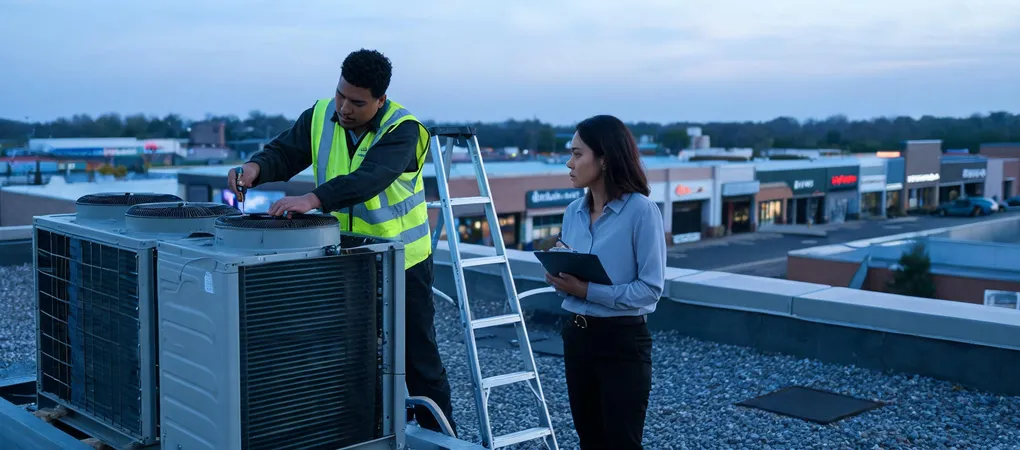
A homeowner is standing in a hot hallway, typing a WhatsApp message in Spanish. Your best technician is on a roof, holding the answer in his head.
Those two facts should not coexist. But in many HVAC shops, they do every day, with all the calm efficiency of a drawer full of unlabeled capacitors.
The new front door is fast
The news that EZContact is bringing AI-powered WhatsApp and voice customer engagement to U.S. Hispanic small businesses is not a niche announcement. It is a signal: the front door of local service is getting faster, more conversational, and more multilingual.
That matters. Pew Research Center has reported that WhatsApp usage is especially high among Hispanic adults in the U.S., around 54% in recent surveys. So yes, the customer channel is changing.
The consensus says the winner is the shop with the fastest AI at the front door. I think that is only half right.
Take a typical anonymized HVAC company: bilingual customers, a dispatcher doing three jobs at once, technicians moving from attic to roof to crawlspace, and an owner who still gets pulled into the weird cases. A request comes in. AI can greet, route, summarize, and book faster than a human who is finishing another task.
But then the job hits the field. That is where the speed advantage often slows down, not because the team is lazy, but because reality is still trapped in human memory.
Speed-to-lead is a relay, not a greeting
Harvard Business Review’s well-known research on response time found companies that respond within one hour are nearly seven times more likely to qualify a prospect than those waiting longer, and more than sixty times more likely than those waiting a day. The first responder advantage is real.
But service work is not finished at qualification. In HVAC, the race continues through dispatch, diagnosis, customer explanation, parts, handoff, invoice, and the next visit.
- Front door speed: AI answers quickly and captures what the customer says.
- Dispatch speed: The team needs the right context without digging through notes.
- Field speed: The technician needs last visit’s facts while standing at the equipment.
- Memory speed: The shop needs what was said in the field, searchable later.
This is where the consensus breaks. A faster inbox does not help much if the work order says “same issue as before” and nobody can remember what before actually meant.
Pick the last return customer. Without checking the system, what did your tech say about that unit last visit?
Now check the work order. Listen to the gap between the wrench and the keyboard.
The field still lacks an ear
SaaS owns the workflow. AI owns more of the reasoning. But the field still lacks a clean input layer for what actually happened beside the condenser, in the mechanical room, or at the customer’s door.
That is why we built Hearit.ai HA-MIC01 as a hands-free field ear, not as back-office software and not as a cheap gadget. It captures spoken work at the moment it happens and turns it into service reports, work orders, and searchable Frontline Work Memory.
Robots need eyes. Field AI needs ears.
The first Physical AI in the trades will not be a robot rolling up your customer’s driveway. It will ride with human workers first. The technician becomes the sensor, with consent, transparency, and worker control.
Telalive can preserve the customer conversation memory at the front desk. HA-MIC01 carries that memory into the field, where the diagnosis, the customer’s phrasing, the equipment behavior, and the senior tech’s pattern recognition can stop evaporating after a long day.
HVAC is the first battlefield
HVAC is not small. The U.S. market is often sized around $159 billion, with roughly 120,000 contractors and more than 400,000 technicians keeping buildings livable. It is also brutally local.
A competitor that responds in seconds now sounds organized before your team has even opened the notes. But the deeper advantage belongs to the shop whose AI can hear both sides of the business: the customer’s words and the field’s facts.
Human memory is excellent at pattern recognition and terrible at being a filing cabinet. After six jobs, two callbacks, a parts run, and a customer explaining a noise by imitating it, details blur. This is not a character flaw. It is biology with a tool belt.
The repeatable idea
Here is the sentence worth repeating: speed-to-lead is only real when the context moves as fast as the conversation.
AI WhatsApp and voice engagement will raise customer expectations. Good. Let the front door get faster. Just do not pretend the race ends there.
In service, speed is visible. Memory is audible. The shop that hears first acts like it knew all along.
From AI phone agents to custom hardware — we’ve got you covered.