
Your Two-Hour Reply Is Competing With an Agent
Salesforce’s AI agents point to a blunt service truth: fast response now wins only when customer words become usable memory for the crew.
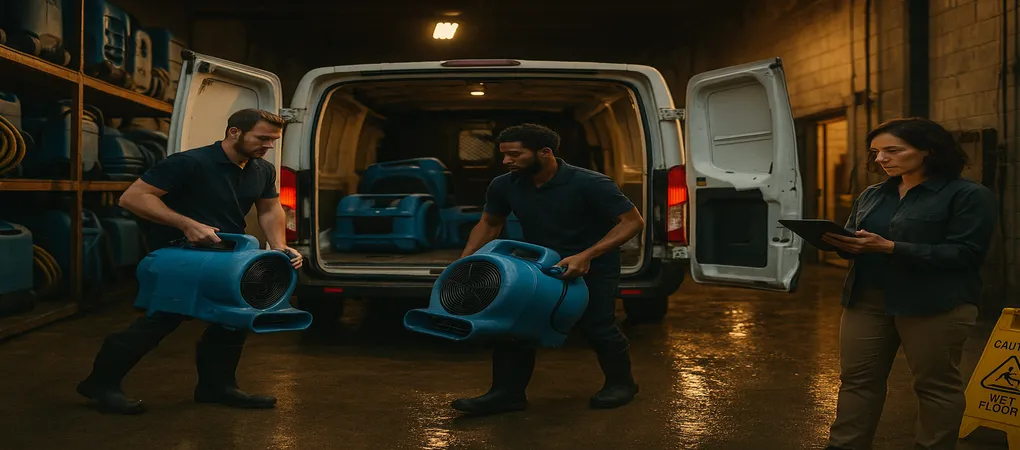
When the building manager says water is coming through the ceiling, are you racing your competitor—or your own memory?
Take a common restoration shop. The crew is loading air movers, someone is finishing photos for insurance, the owner is still in wet socks from the last site, and a new customer needs a decision now. Very glamorous. Very normal.
The race they are already losing
The old assumption was simple: respond when the team gets clear, then collect the details. That worked when every nearby competitor had the same human bottleneck.
Now the competitor can respond in 2 seconds with an AI agent. Your team may respond in 2 hours after finishing a job, eating a sandwich over the sink, and trying to remember which customer had the soaked ceiling tile.
- Clock one: how fast the customer hears back.
- Clock two: how fast the business gets usable context to the right person.
The problem has a name: the two-clock problem. The first clock is visible and embarrassing. The second clock is quieter, which is how it gets away with more damage.
Salesforce made the baseline obvious
Small Business Trends covered Salesforce’s Winter ’27 release as another step toward AI agents handling business workflows. That matters less because of Salesforce itself, and more because it tells small companies what customers will soon treat as ordinary.
Gartner has predicted that by 2028, 33% of enterprise software applications will include agentic AI, up from less than 1% in 2024. In plain English: software is learning to act, not just store.
The company with one clock beats the company with two.
The first-responder advantage is not folklore. The Lead Response Management Study published in Harvard Business Review found that firms contacting potential customers within one hour were nearly seven times as likely to have a meaningful conversation with a decision maker as firms that waited even one additional hour.
That finding is old enough to rent a car now. The uncomfortable part is that AI has made one hour feel slow.
Pick the last urgent customer conversation. How long until your crew had the exact building details, access notes, customer words, and next action in front of them?
Not a vibe. Not “someone told Jake.” The actual context your team used to decide what to do next.
AI speed changes the math, but memory wins the job
A fast reply is table stakes. Useful speed means the business can answer, understand, route, and prepare while the human team is still working.
In the restoration case, the agent does not just say, “We can help.” It asks where the water is coming from, whether power is affected, what floor, what access instructions apply, whether insurance is involved, and whether anyone on site has authority to approve work. Then it gives the crew memory, not gossip.
This is where tools like Telalive matter. Customer phone conversations become searchable customer memory, so the phrase the building manager used—“brown water near the elevator bank”—does not become “water issue” in a rushed note.
And once the crew arrives, the same principle moves into the field. A consent-first field voice tool like Hearit.ai HA-MIC01 can turn spoken site facts into work memory without asking a soaked technician to re-type the day after a long shift. Not surveillance. Not a replacement for the tech. Just fewer important details dying between the wrench and the keyboard.
The human reason this matters
People do not remember work as clean database rows. They remember scenes, tones, warnings, shortcuts, and odd little details that seem irrelevant until the return visit.
That is why the vague work order creates the diagnosis you pay for twice. It is also why the 30-year veteran looks magical. He is not magic; he has compressed thousands of patterns into memory, and retirement has a rude delete key.
- Fast response: wins attention in the first minute.
- Shared memory: carries trust into the first visit.
- Searchable work history: compounds every future visit.
Salesforce’s agent push is a signal for every service business, not only companies using Salesforce. The next workflow does not wait politely for a human to type context into the system later.
The first company no longer just answers first. It remembers first. That is the uncomfortable part.
From AI phone agents to custom hardware — we’ve got you covered.