
The Uniform Is Becoming the First Responder
AI voice receptionists move the starting gun to zero. The next race in HVAC is field memory carried on the technician’s uniform.
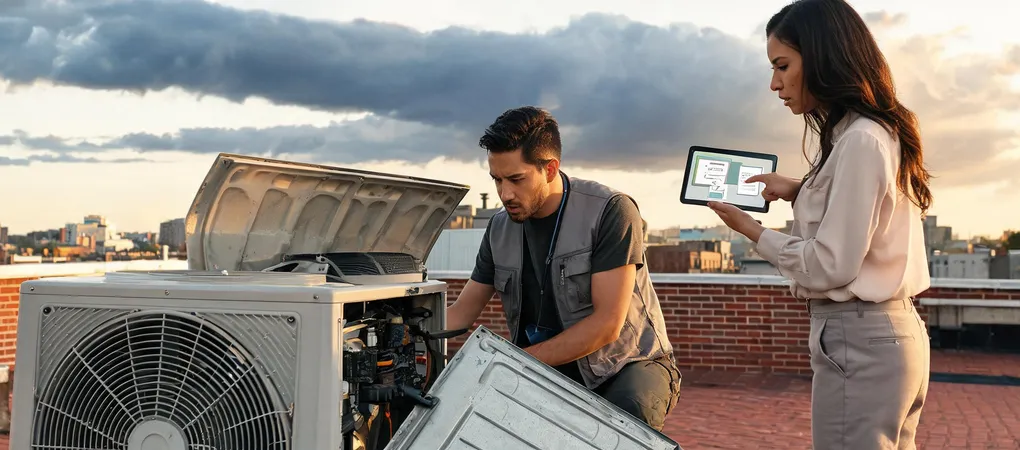
A customer is explaining the furnace noise in perfect detail. Your tech is on a roof, your dispatcher is juggling parts, and somewhere a competitor’s AI voice receptionist is answering in two seconds. Charming, really.
That is why the recent AI voice receptionist announcements for home service contractors matter. Not because the phone suddenly became magical. Because the starting gun in local service just moved closer to zero.
The race is not “phone coverage.” It is response velocity.
Speed-to-lead sounds like sales language. In trades, it is simpler: the customer has a hot house, a wet ceiling, or a furnace making a noise that would embarrass a small tractor.
The first shop that responds with calm, specific next steps now feels like the competent shop. The slow shop may be better. It may be cheaper. It may have nicer vans. It is still arriving second.
The Uniform Speed Model
A useful way to think about this is the Uniform Speed Model: Desk, Drive, Door.
- Desk: The customer’s words become usable context immediately, not a sticky note with three heroic abbreviations.
- Drive: The technician gets the story before arrival, not after asking the customer to repeat it.
- Door: What the tech sees and says becomes memory for the next visit, not a sentence typed at 7:43 p.m. with one thumb.
Harvard Business Review’s well-known study of 2,241 U.S. companies found that firms contacting prospects within an hour were nearly seven times more likely to qualify them than firms that waited just one more hour. The Lead Response Management research behind much of the five-minute-response conversation found the same basic truth: time hardens quickly.
HVAC is a brutal first battlefield for this. The U.S. market is roughly $159B, with about 120,000 contractors and around 425,000 technicians. That is a lot of trucks, roofs, crawlspaces, and half-remembered context competing on minutes.
Pick the last urgent customer call. How long until the tech had the full context in their hands?
Not the appointment time. The real context: what they said, the sound they described, the prior repair, the concern they repeated twice.
AI changes the math because it changes the handoff
Telalive is one part of this: customer phone conversations become searchable customer memory. Not a better voicemail pile. Actual words, organized so the next person does not start from fog.
But the phone is only the first checkpoint. The bigger category is the field uniform gaining an AI ear.
“The fastest contractor is the one whose memory moves with the work.”
Hearit.ai HA-MIC01 is built for that layer: the hands-free field ear on the work vest, in the bay, on the roof, at the customer’s door. It turns spoken work into service reports, work orders, and Frontline Work Memory while the work is still fresh.
This is not surveillance. It is consent-first, work-only memory that respects technician dignity. The point is not to replace judgment; it is to stop forcing human memory to act like enterprise infrastructure after a ten-hour day.
The first Physical AI rides with the technician
SaaS owns the workflow. AI owns more of the reasoning. But the field still needs an input layer that hears reality before it becomes a vague work order.
Robots need eyes. Field AI needs ears. And for a long time, the first serious Physical AI in trades will not roll in on its own wheels. It will ride with the technician, because the technician is already standing where reality happens.
The race is no longer who has software in the office. The race is whose field memory reaches the next decision first.
From AI phone agents to custom hardware — we’ve got you covered.