
Voice AI Raised the Bar for HVAC
Voice AI is turning restaurants into instant channels. HVAC is next: the shop that captures field reality fastest acts first, quotes clearer, wins trust.
Everyone says HVAC has a demand problem. The real problem is the opposite: your team already knows the answer, but your business cannot repeat it fast enough.
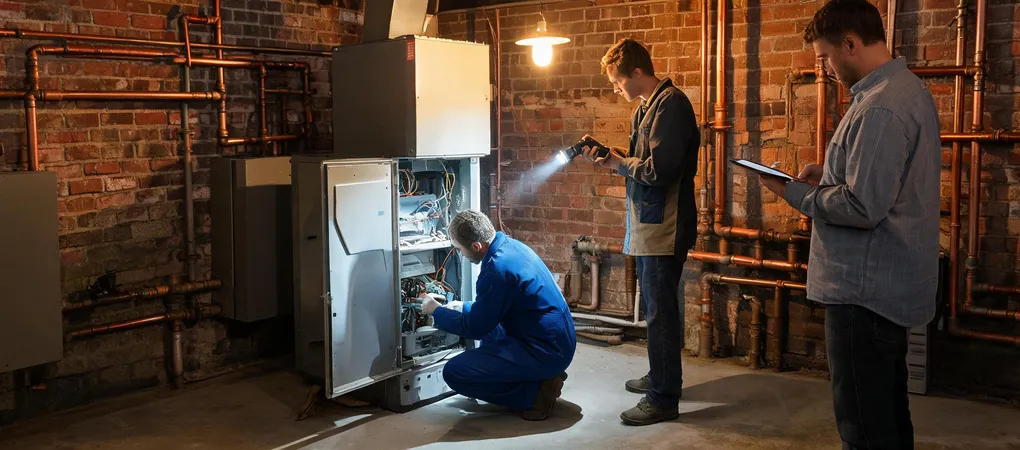
A tech leaves a basement at 5:47 p.m. The capacitor, the filter size, the customer’s exact complaint, the odd noise that only happened after the blower ramped up — all of it is clear in his head for about eleven minutes.
Field note 1: Restaurants just showed the new standard
Deliverect and SoundHound AI announced a partnership to turn restaurant voice ordering into a fully automated ordering channel. That matters beyond restaurants.
The signal is simple: customers are being trained to expect voice to become action. Not a note. Not a task for later. Action.
“The company that can repeat reality first gets to act first.”
In restaurants, the voice order becomes the ticket. In field service, the customer’s words, the technician’s diagnosis, and the jobsite facts should become the work memory.
But most shops still run on a gap: what the business knows in the field versus what the business records in the system.
Field note 2: Your competitor is not waiting for the end of the job
Look, this is a race. Your competitor’s AI can respond in two seconds with a calm answer, a next step, and enough context to keep the customer moving.
You may be answering two hours later, after the roof unit, after the parts run, after the truck is parked, after the tech tries to remember what Mrs. Chen said about the upstairs bedroom.
- The race is not only to answer: it is to carry the customer’s actual words into the job.
- The race is not only to dispatch: it is to give the next person clean context.
- The race is not only to invoice: it is to make the work order specific enough that nobody pays for the same diagnosis twice.
Harvard Business Review published an audit of 2,241 U.S. companies and found teams that contacted a potential customer within an hour were nearly seven times more likely to qualify that inquiry than teams that waited longer. The Lead Response Management study is even harsher around the first five minutes: contact and qualification odds fall sharply after that window.
That is not abstract math. That is the customer choosing the contractor who sounds organized first.
Pick the last urgent no-cooling call.
How long until your dispatcher, tech, and office had the same version of what the customer said, what the tech found, and what had to happen next?
Field note 3: HVAC is the first battlefield for field voice
HVAC is not small. IBISWorld estimates the U.S. HVAC contractors market at roughly $159 billion. Industry counts put the field at around 120,000 contractor businesses, and BLS data shows roughly 425,000 HVACR mechanics and installers.
That is a huge amount of knowledge moving through attics, crawlspaces, vans, basements, and customer doorways — mostly by voice.
ServiceTitan, Housecall Pro, Jobber, Dynamics — these systems own workflow. But they still depend on human beings typing field reality after the fact.
That is the design crack. The shop is designed as if reality arrives cleanly in boxes. The shipped version is a tired tech in a van, thumbs on a phone, compressing a complicated job into three vague lines.
Field note 4: Reconstruction is not capture
Here is the engineering truth: reconstruction can get cheaper, but it never beats original capture. Once the original field signal is gone, no model can perfectly infer the customer’s wording, the tech’s hesitation, or the sequence of facts.
That is why we built Hearit.ai HA-MIC01 as the ear of AI on the jobsite. Not hardware for its own sake. A hands-free field ear that captures spoken work where it happens and turns it into service reports, work orders, and searchable Frontline Work Memory.
- At the customer’s door: Telalive turns the conversation into searchable customer memory, using the customer’s own words.
- In the mechanical room: the tech explains the diagnosis while his hands are still on the equipment.
- At shift handoff: context survives the handoff instead of dying in a vague note.
This has to be consent-first and work-only. Technician dignity matters. The best field AI rides with human workers before it ever replaces a truck roll with a robot.
Robots need eyes. Field AI needs ears.
Field note 5: Speed changes the math because memory moves sooner
The restaurant order goes from voice to kitchen action. The HVAC job should go from voice to dispatch context, field diagnosis, customer update, parts note, invoice detail, and next-visit memory.
When HA-MIC01 captures the field truth at the source, the office is not waiting for the end of the day to understand the job. The business starts acting from the same reality the tech just lived.
This is where AI is going now. Not just chat boxes. Not just back-office summaries. The next layer is Enterprise Memory built from real-world input.
The fastest shop will not be the one that types harder. It will be the one whose business hears reality the moment the work happens.
From AI phone agents to custom hardware — we’ve got you covered.