
The Work Order Is the AI Guardrail
AI agents need guardrails, but HVAC shops need better field inputs first. Break down the work order fields that keep the next visit and quote sane today.
400,000 emails in three days is a useful number because it is too large to argue with and too stupid to admire.
That was the lesson in a recent AI-agent warning making the rounds: small businesses are adding automation faster than they are adding brakes. The fashionable answer is guardrails. Sensible. But in field service, the first guardrail is not an approval screen. It is the work order.
Follow one routine no-cool visit
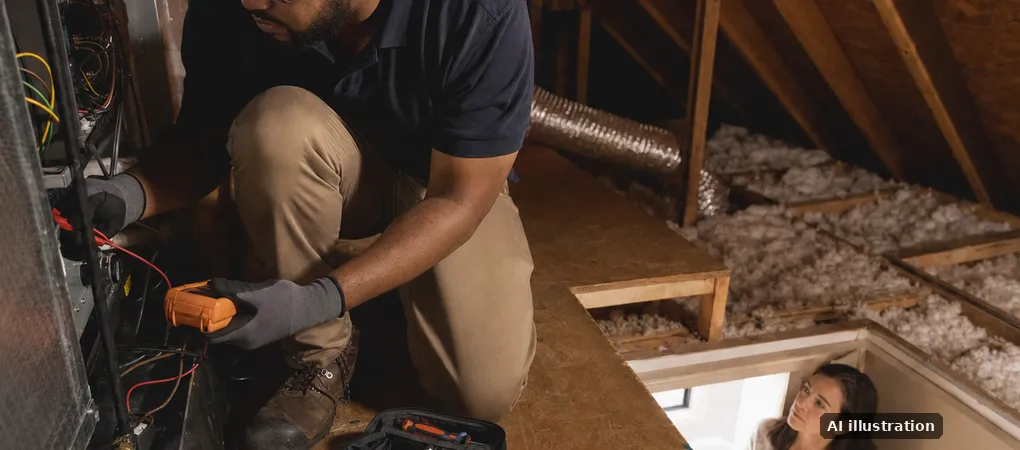
Consider a routine residential HVAC no-cool visit. The technician arrives, confirms the thermostat is set to cool, checks whether the indoor blower is running, then moves outside to the condenser. The contactor pulls in. The fan does not start. The compressor hums, then drops out.
Now the real work starts. Disconnect verified. Voltage checked. Capacitor tested against its rated microfarads. The part is weak. The technician explains the finding to the homeowner, gets approval, replaces the capacitor, restarts the unit, and checks supply and return temperatures.
Then comes the part every owner knows too well. The work order says: “Replaced capacitor. System cooling. Recommended maintenance.” It is technically true, which is the most annoying kind of insufficient.
What disappeared? The outdoor coil was dirty but not washed. The homeowner asked whether the system was “on its last legs.” The tech said the capacitor failure alone does not prove that, but the age and coil condition make a maintenance visit worth discussing. The temperature split improved after repair, but airflow was still a little weak at two registers.
“An AI agent with a vague work order is not automated intelligence. It is confident clerical work with a blindfold.”
The deliverable to fix is the work order
Field-service SaaS platforms such as ServiceTitan, Housecall Pro, Jobber, and Dynamics are good at workflow. Dispatch, invoice, customer record, task status. Fine. But they still depend on a tired human to type field reality after the visit.
That is where guardrails should become practical. Not a policy document. A better work order structure that separates what was observed, what was measured, what was changed, and what remains uncertain.
- Observed: Equipment location, model or asset ID, thermostat state, indoor blower behavior, condenser behavior, coil condition, filter condition, access limits, and the customer’s own words about the symptom.
- Measured: Line voltage, control voltage where relevant, capacitor reading versus rating, supply and return temperatures, static pressure if checked, amperage, refrigerant readings only when actually taken.
- Changed: Part replaced, part rating, wiring restored, drain cleared, filter replaced, panels reinstalled, thermostat setting adjusted, system restarted, before-and-after readings.
- Still uncertain: Intermittent fault not reproduced, airflow restriction location not confirmed, coil cleaning not performed, customer decision pending, follow-up test needed.
Pick the last return customer.
Without opening the system, what did your tech say about the equipment last visit? Now open the work order. The gap is where your next AI agent will make things up unless you give it better memory.
A sample work order entry
Sample only: No-cool complaint. Thermostat set to cool; indoor blower operating. Outdoor contactor pulled in; condenser fan failed to start and compressor attempted start. Verified power at disconnect. Tested dual capacitor: fan side below rated value. Replaced capacitor with approved part after customer approval. System restarted. Supply/return temperature split improved after repair. Outdoor coil visibly dirty; coil wash not completed today. Customer asked about equipment life; explained capacitor failure alone is not a full-system diagnosis. Recommend maintenance review and airflow check on next visit.
That entry is not poetry. It should not be. It is a guardrail. It gives the next technician context, gives the office enough detail to prepare a quote, and gives any AI agent a bounded record instead of a fog machine.
The five cheap brakes
The current AI-agent panic is healthy if it moves owners toward boring controls. Boring controls are underrated. They are how adults keep software from becoming an unpaid intern with root access.
- Schema first: Make the agent fill observed, measured, changed, and uncertain fields separately.
- Human review: Customer-facing notes, quotes, and warranty language need professional review before they leave the shop.
- Action limits: Let AI draft and organize. Do not let it approve parts, make diagnoses, or close exceptions on its own.
- Uncertainty queue: If the source record is thin, the agent should ask for review instead of sounding helpful.
- Source trail: Keep the spoken field fact linked to the reviewed note, with consent and work-only boundaries.
This is the reason Hearit.ai HA-MIC01 matters in the field-voice strategy: it is designed as a hands-free field input for spoken work, not as a replacement for the technician or the software stack. The point is to help the shop carry permitted job context into reviewed records while the details are still fresh.
There is one test any field voice tool must pass. The reviewed record must be faster to produce than today’s note. If it takes longer, the workflow has not improved; it has merely acquired a more expensive accent.
For a pilot discussion, bring one de-identified HVAC work order and mark the fields your team struggles to capture after a long day. The future of small-business AI will not be decided by how loudly an agent acts, but by whether the work memory underneath it is fit to be trusted.